 Memorate
 is a flashcard app. A card has a question and an answer — an Italian word and its translation, a capital and its country, a definition and its term. So far, so ordinary.
The difference is when a card comes back.
Spaced repetition
Memory does not fade evenly. Something you just learned lasts a few hours. The same thing after five successful reviews lasts months. If you studied everything at the same interval, you would waste half your time on things you already know and spend the other half catching up on things you had already lost.
Memorate keeps two numbers for every card:
- difficulty — how demanding this particular thing is for you,
- stability — how long it stays in your memory.
From those it works out the next due date. Answer well and stability grows, so the interval stretches. Answer badly and stability drops, so the card comes back sooner.
The model is called FSRS-6 and Memorate uses it as a pure calculation: the same inputs always give the same result. Details in How reviews are scheduled.
Test and drill
Memorate has two kinds of session and they are not variants of the same thing.
| Test | Drill | |
|---|---|---|
| When a card appears | when it is due | today, until you get it right |
| How you grade it | six grades, A to F | right / wrong |
| What it changes | difficulty, stability, due date | queue membership only |
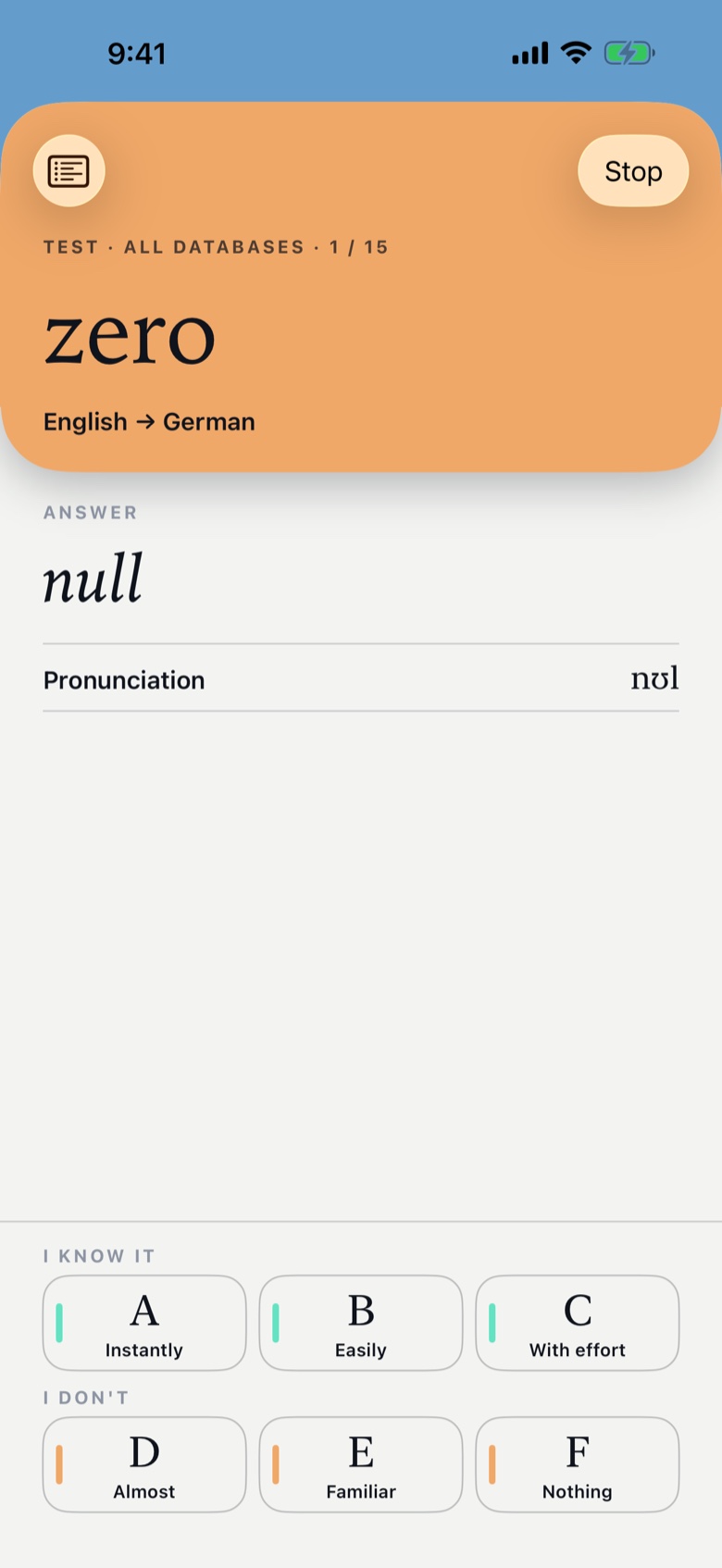
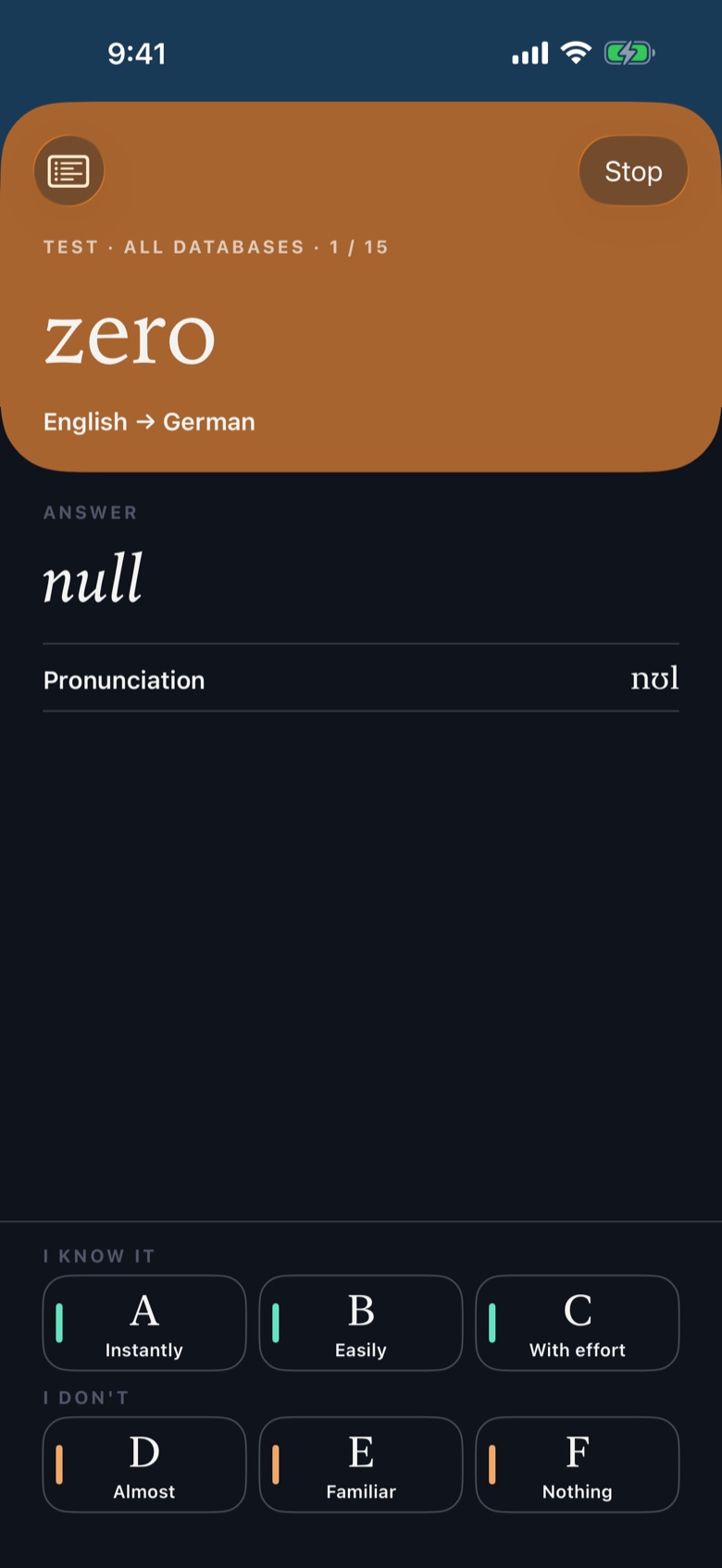
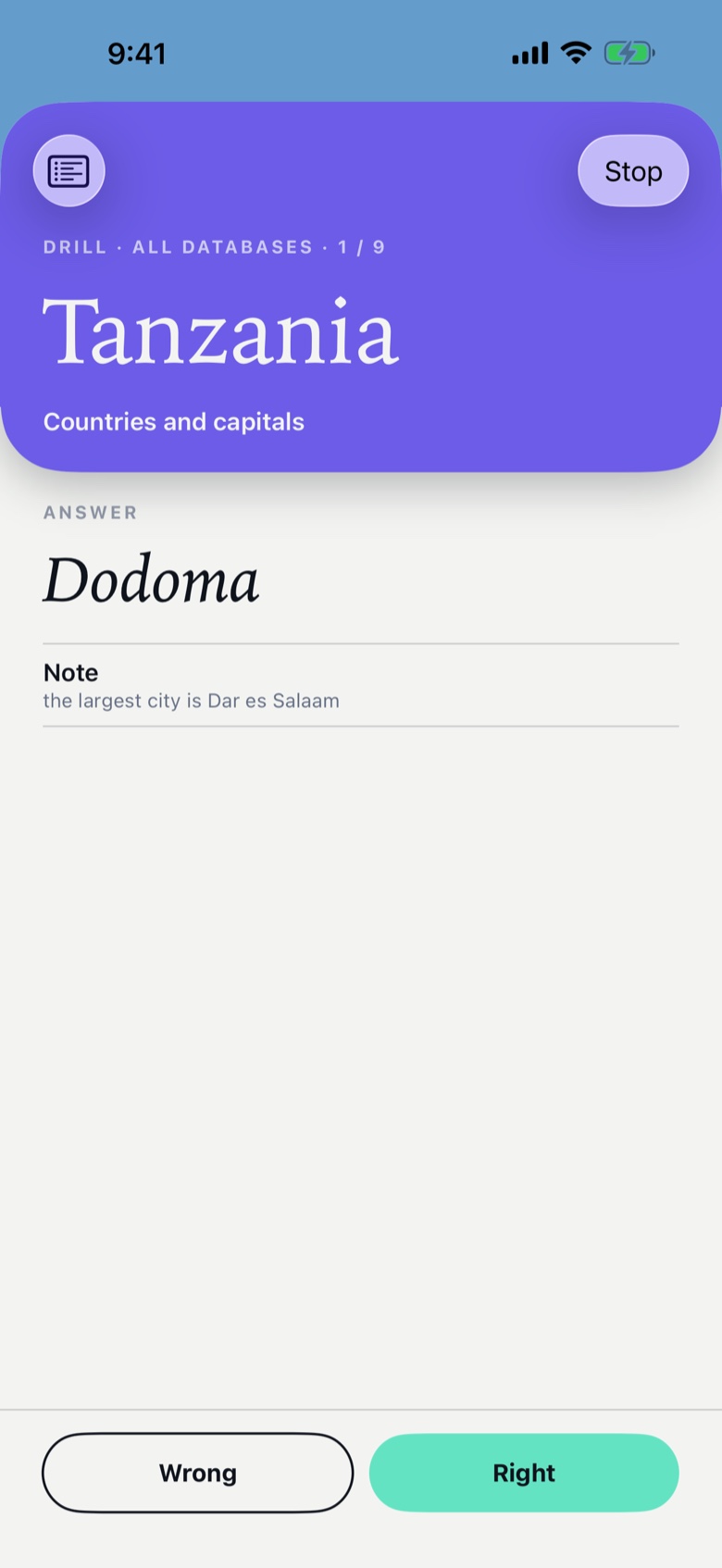
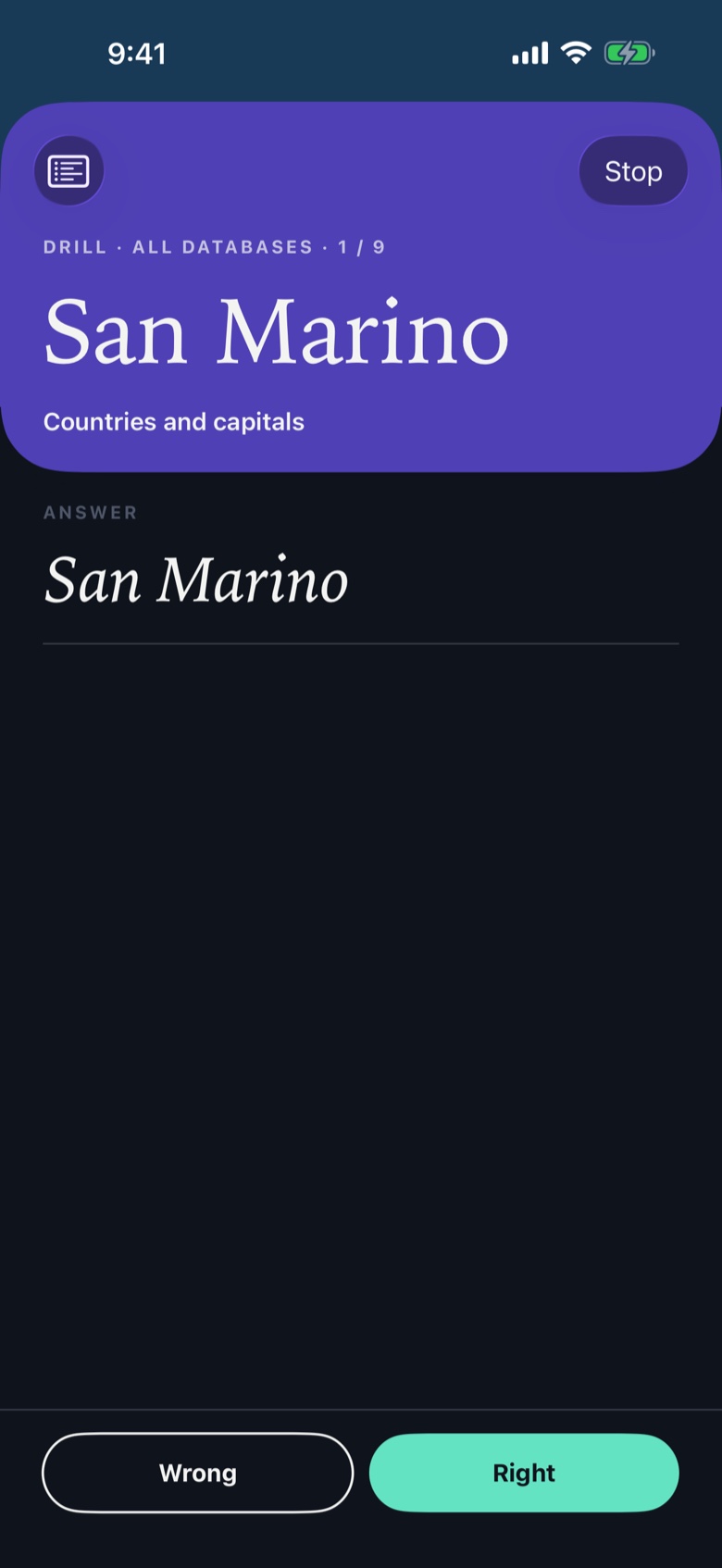
A test is the long-term signal. A drill is short-term practice — when you answer "hard" or worse in a test, the card falls into the drill and stays there until you get it right today. A drill never touches the schedule.
What Memorate does not do
There is no account, no server and no sign-in. Your library lives on your phone. It collects no analytics, sends nothing anywhere and has no ads. Your backup is a file you can read.
There are also no badges for a seven-day streak, and nothing designed to keep you in the app longer than you need. The goal is the opposite: clear today's work and close it.
How to read this manual
The chapters roughly follow the order in which you run into things. If you are starting out, read First steps and The overview, and come back for the rest when you need it.