 Memorate
A card has content and a learning state, and those two things are separate. Fixing a typo in an answer costs you nothing measured — you are still learning the same thing.
A new card
On the deck detail, tap +.
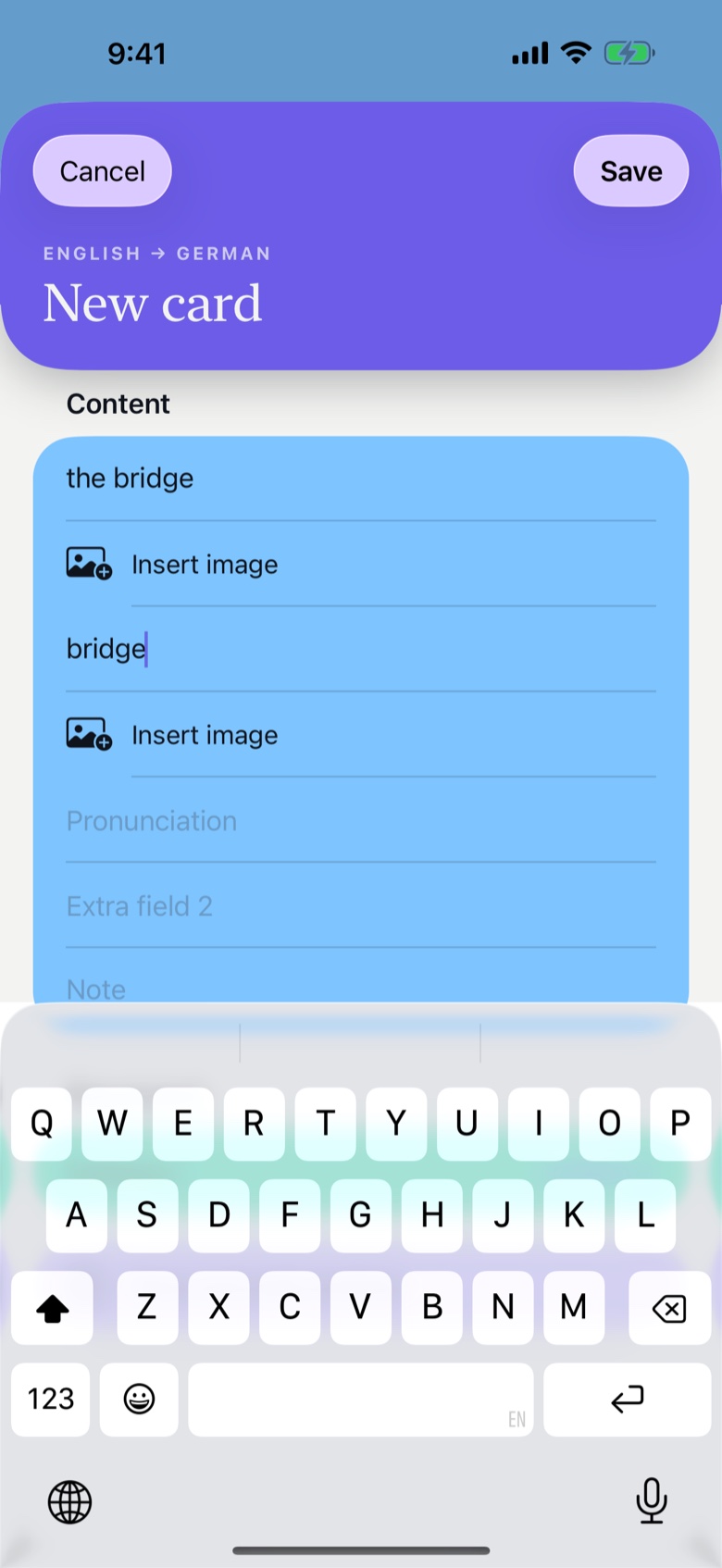
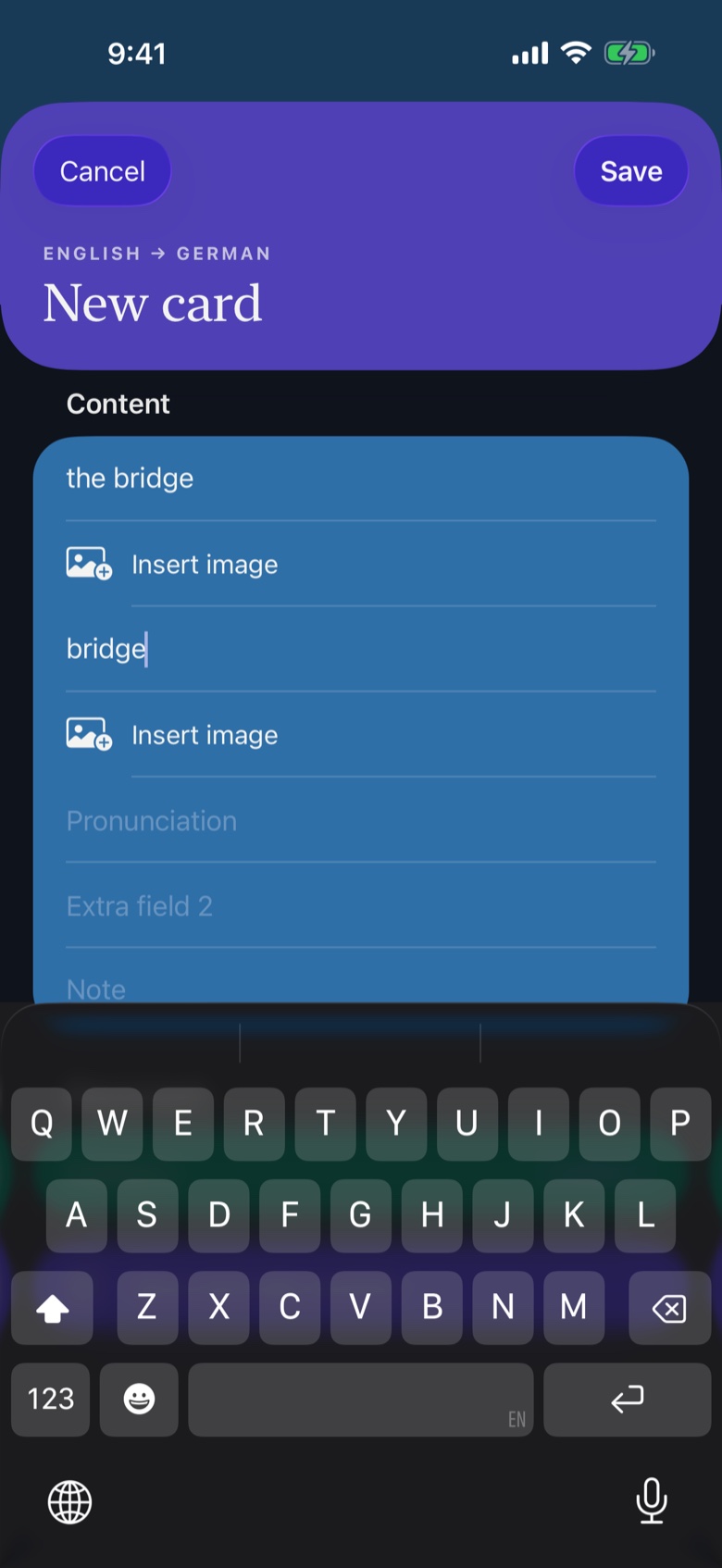
Content
- Question and Answer — required. Either can be an image instead of text; a side is text or an image.
- Extra fields 1 and 2 — optional. For languages they are handy for pronunciation or an example sentence. What they are called and when they appear during study is set in the deck editor (and during import) — it applies to the whole deck, not to one card.
- Note — anything that should be visible on the detail but not during a test.
Placement
- Category — which group the card belongs to. The default is Unfiled.
At the bottom is Save and add another — after saving, the editor opens empty and stays in the same category. For writing a run of cards.
Directions
The card "hello / ciao" can be learned two ways:
- Question to answer — you see "hello" and recall "ciao",
- Answer to question — you see "ciao" and recall "hello".
These are two different skills. Recognising a foreign word is easier than producing it. Memorate therefore schedules each direction separately: each has its own difficulty, stability and due date.
A new card only has the forward direction prepared, and even that starts outside learning. The reverse direction comes into existence when you commit it.
The card detail
Tapping a card in the list opens its detail.
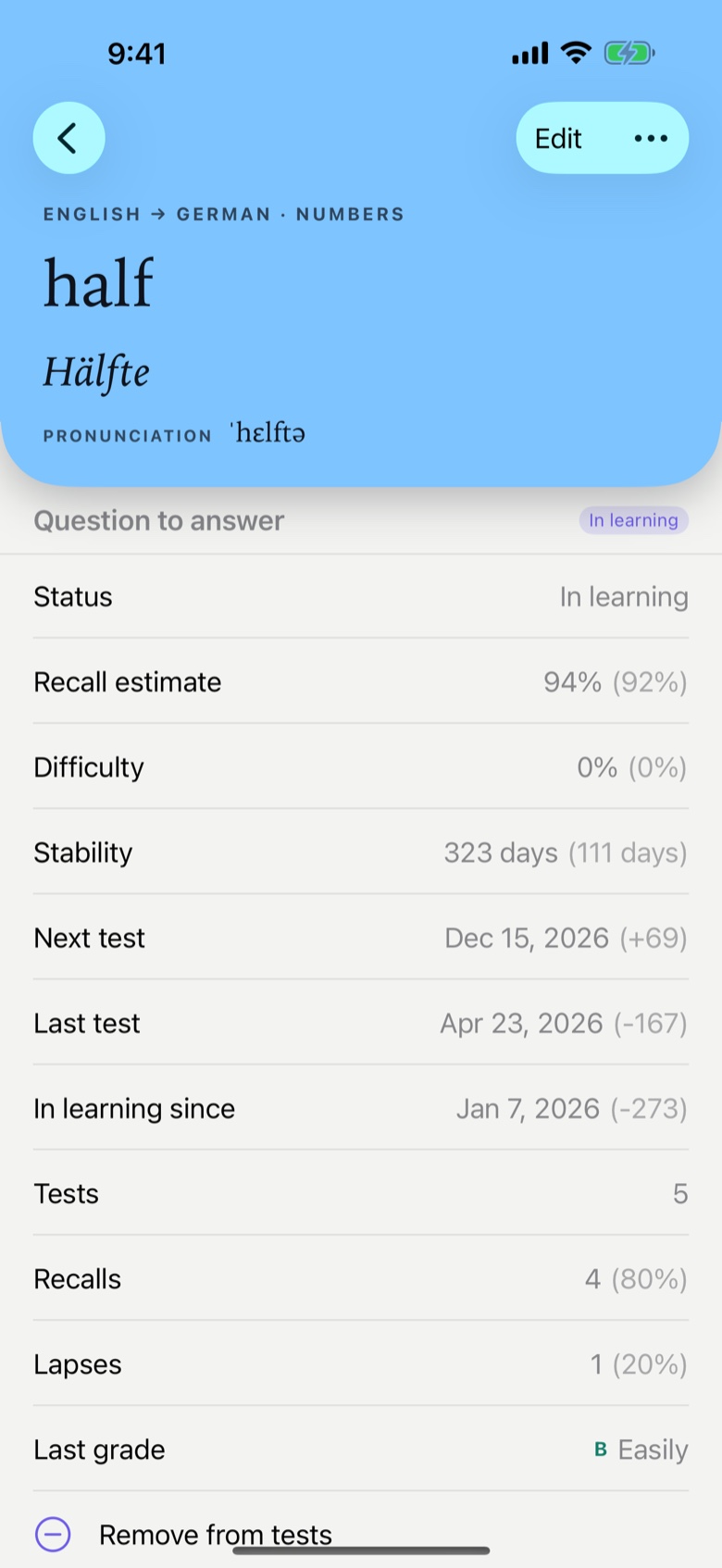
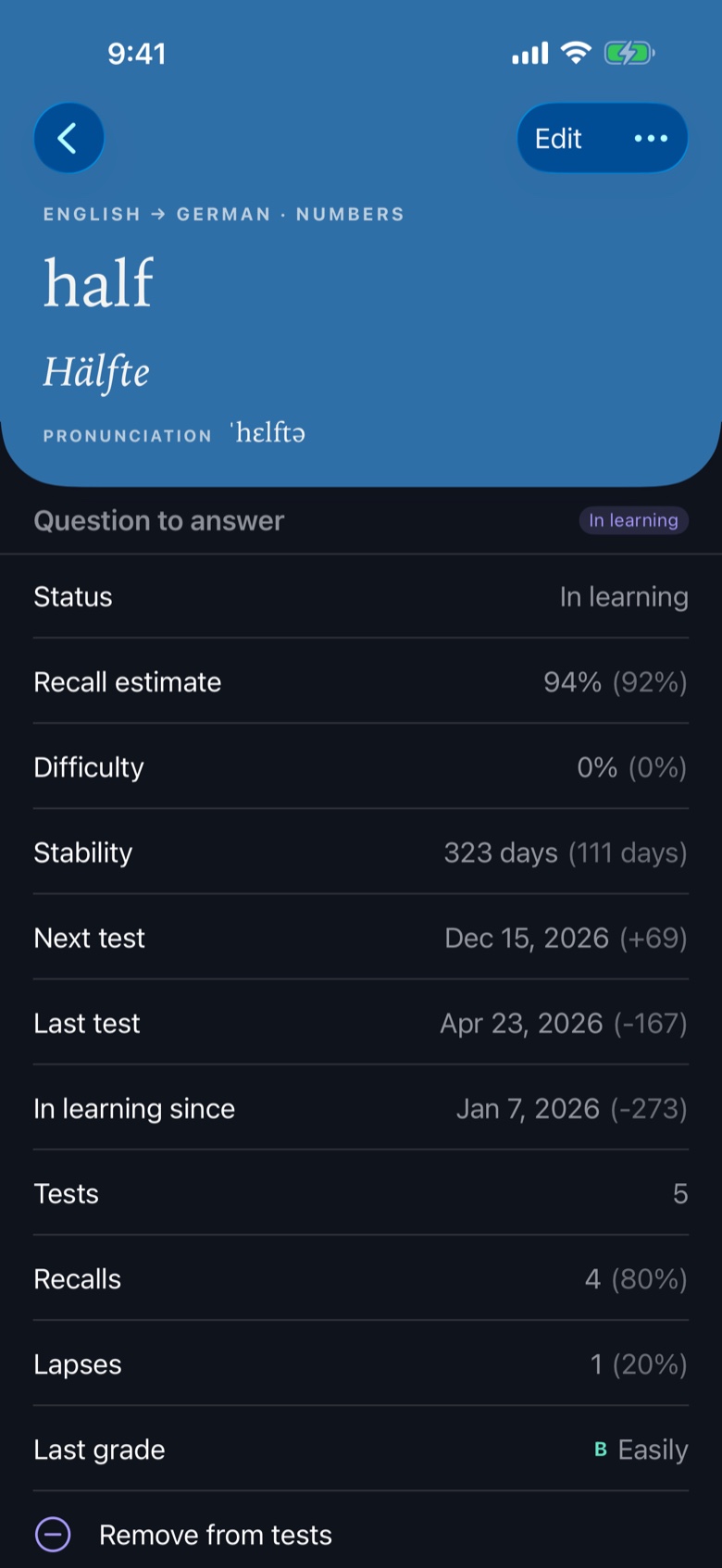
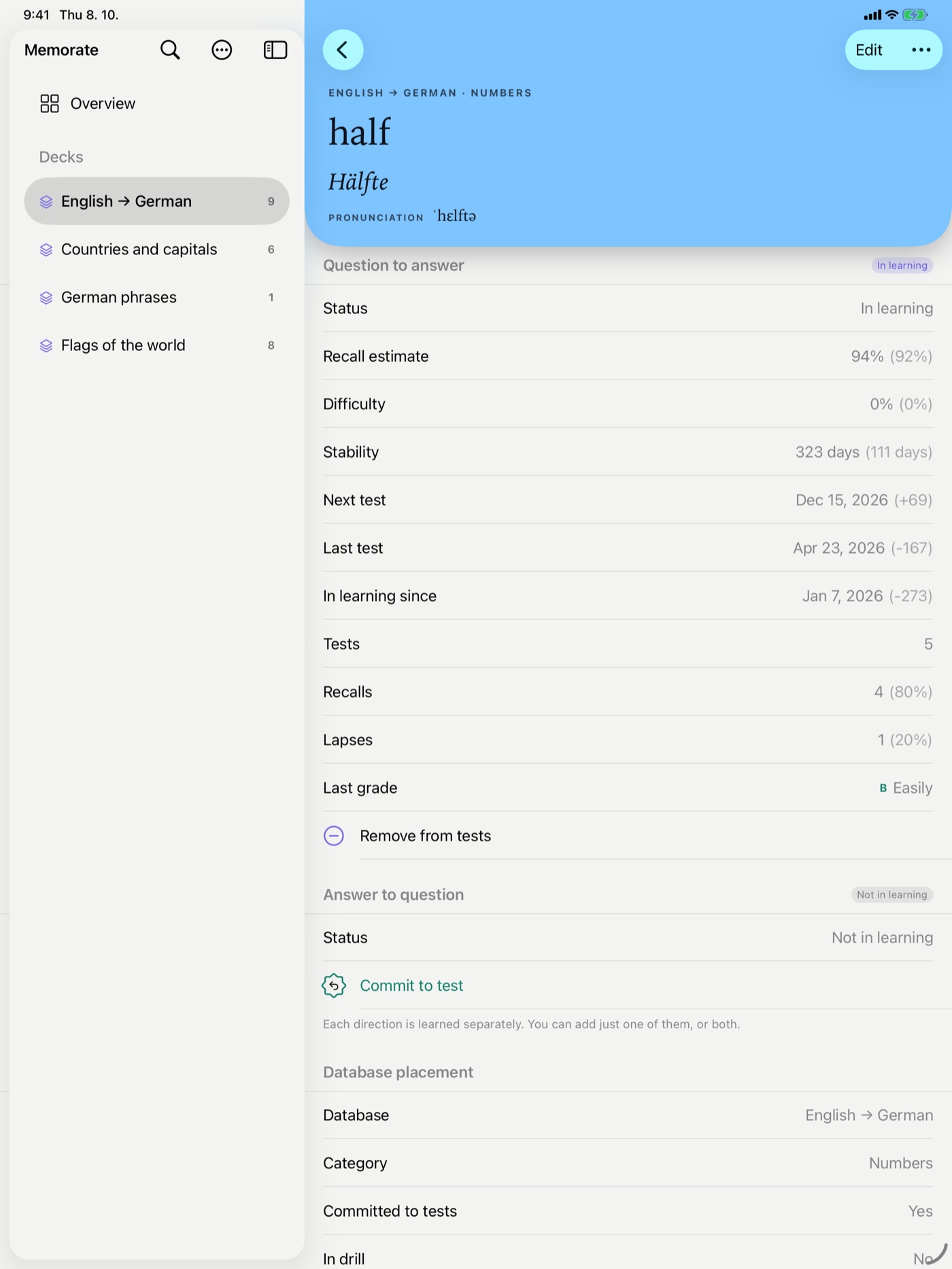
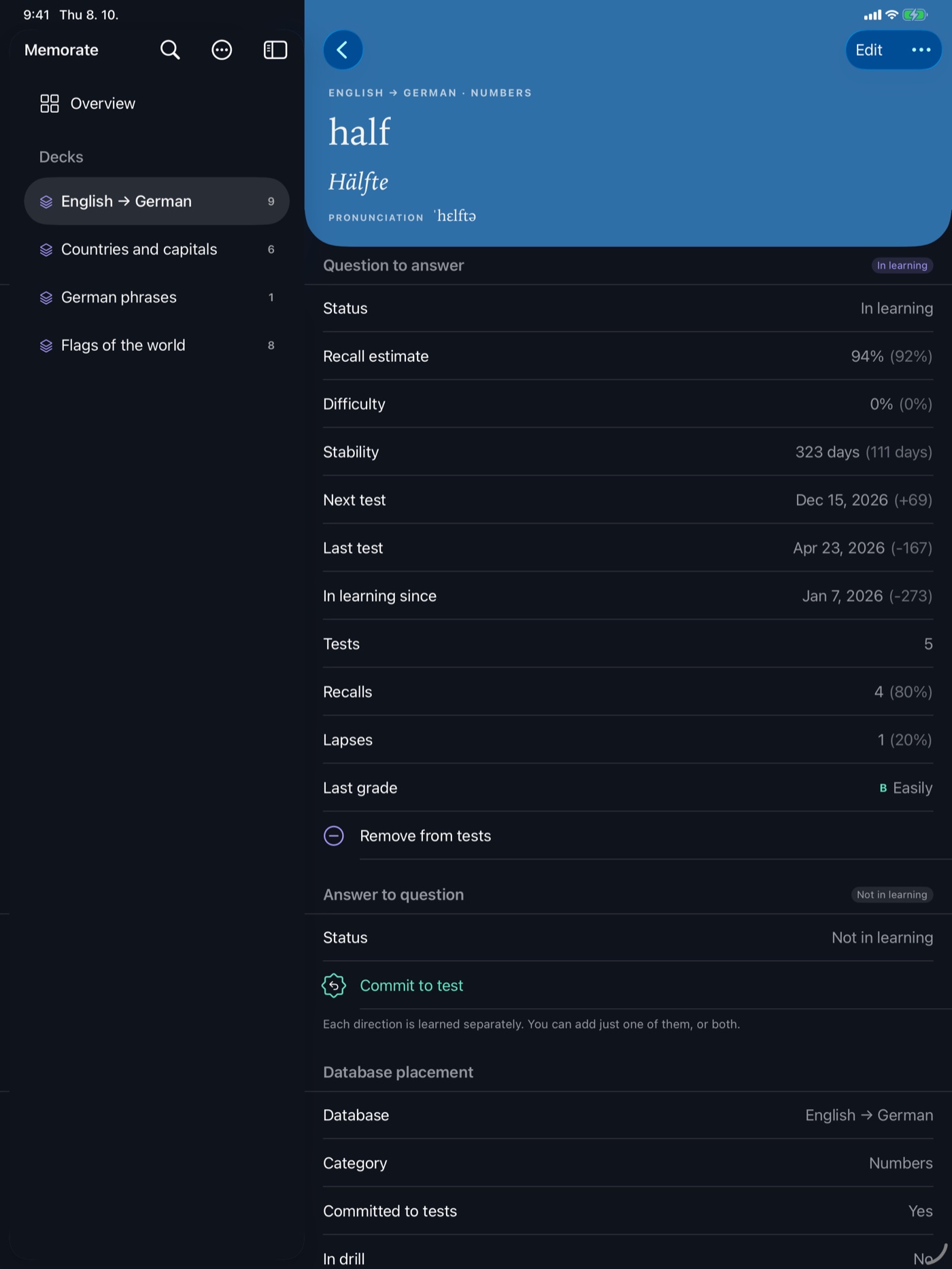
Content shows the question, answer, extra fields and the category. A note, if the card has one, gets a section of its own right below.
Then comes a section per direction, headed by its name — Question to answer and Answer to question — with a badge saying where that direction stands. In detailed mode each one lists:
| Value | What it means |
|---|---|
| Status | in learning / due now / not in learning |
| Recall estimate | how likely the scheduler thinks you would recall it right now |
| Difficulty | how demanding this thing is for you |
| Stability | how long it stays in your memory |
| Next test, Last test | dates |
| In learning since | when you committed it |
| Tests, Recalls, Lapses | answer counters |
| Last grade | the letter you last gave it |
Database placement repeats which deck and category the card is in and whether it is committed or in drill.
History is a timeline of what happened to the card — commits, answers and their grades.
Actions on a card
Directly below the content the card has two sections, one per direction — Question to answer and Answer to question. Each holds the status and a button:
- Commit to test — the direction starts being learned,
- Remove from tests — it stops appearing, but nothing is erased.
The toolbar at the top has Edit (back to the editor) and, in the overflow menu, Report a mistake for a typo in a ready-made deck.
The card list does the same committing faster: swipe a row from left to right to reveal a button for each direction — Commit to test and Commit reversed — and a full swipe commits the forward one.
Deleting a card lives in that list too, and nowhere else: swipe the row right to left for Delete. That one asks first, committing does not. The card leaves the deck, the history stays in the journal.
What committing does
At the moment you commit, the card gets:
- difficulty 0.40 and stability 1 day,
- a first due date tomorrow or the day after,
- and appears in today's drill straight away.
So committing does not put a card into a test right away — it schedules it. What you do with it today is the drill.
What removing does
The direction stops appearing in tests and in drills. Measured values and history are not erased — commit it again and it picks up where it left off.
Removing is the right tool for a card that is annoying you right now. It is not deletion and you lose nothing by using it.